


Nutritionist vs Dermatologist: What's the Difference and Do You Need Both?
- Bella Dorey
- Jun 2
- 3 min read
By Bella Dorey, BANT Registered Nutritional Therapist
If you're dealing with a persistent skin condition, whether that's acne, eczema, rosacea or something else, you've probably wondered at some point whether to see a dermatologist, a nutritionist, or both. The honest answer depends on what's driving your symptoms and what you're looking for from treatment.
Here's a straightforward breakdown of what each profession offers and where they work best together, so you can understand the difference between Nutritionist vs Dermatologist.
What a dermatologist does
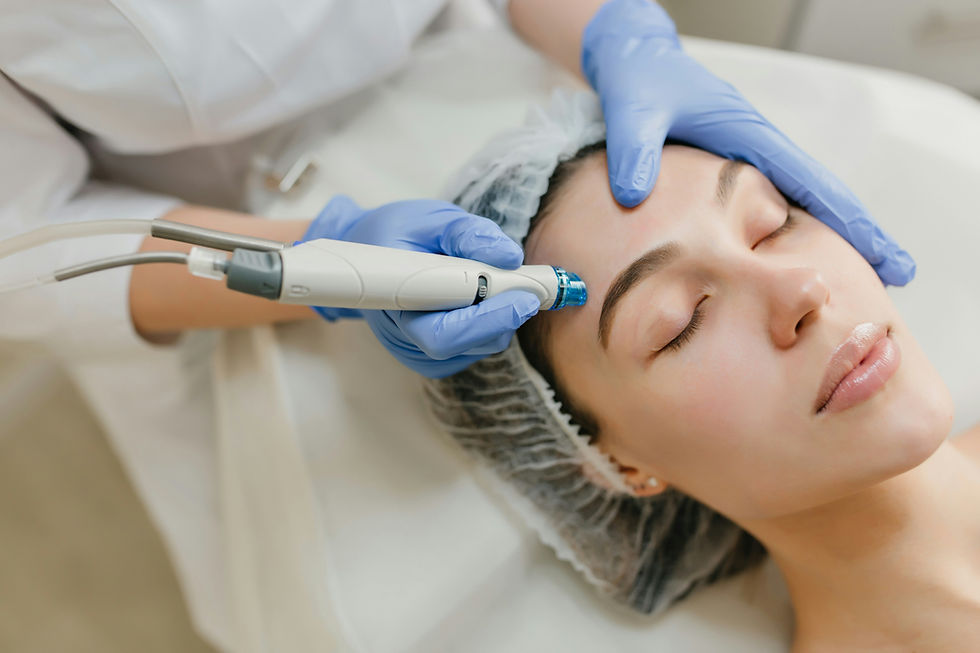
Dermatologists are medical doctors who specialise in diagnosing and treating skin, hair and nail conditions. They are trained to identify skin diseases, prescribe medications (including topical retinoids, antibiotics, immunosuppressants and isotretinoin), perform procedures (such as biopsies, laser treatments and steroid injections), and rule out serious conditions including skin cancer.
Dermatologists are invaluable for diagnosis, for moderate to severe conditions requiring prescription treatments, and for monitoring skin health medically. If you have a new or unusual lesion, a rapidly changing mole, or severe inflammatory skin disease, a dermatologist is the right first port of call.
What dermatology training doesn't traditionally focus on is the internal drivers of skin conditions: nutrition, gut health, hormone balance, nutrient deficiencies and lifestyle factors. This is where to bridge between dermatology and nutrition can be made.
What a nutritional therapist does
A registered nutritional therapist takes a different lens, looking at the body systemically to identify and address the internal factors that may be driving or worsening skin symptoms. This includes detailed assessment of diet, gut health, hormone balance, nutrient status, stress, sleep, medications and health history.
A nutritional therapist cannot diagnose, prescribe medication or carry out medical procedures. What they can do is investigate the root causes that don't show up in a standard dermatology appointment: gut dysbiosis, intestinal permeability, hormonal imbalances, micronutrient deficiencies, inflammatory dietary patterns and the impact of stress on skin health.
For many people, this is the missing piece. Topical treatments and medications address the symptom at the skin surface; nutritional therapy works on what's driving it from the inside.
Where they overlap, and where they complement each other: Nutritionist vs Dermatologist
There is meaningful overlap in the middle. Both dermatologists and nutritional therapists who specialise in skin conditions will often discuss dietary factors, stress and lifestyle. Some dermatologists are increasingly aware of the gut-skin axis and may mention diet to their patients.
Where the two professions work best together is in complex or chronic cases. Someone who has been on multiple courses of antibiotics for acne without lasting results, for example, benefits enormously from having the gut health impacts of those antibiotics addressed nutritionally, while continuing to work with their dermatologist on skin-specific management. Similarly, eczema management often involves prescription topical steroids for flare management alongside nutritional work to reduce the frequency and severity of flares over time.
This combined approach is sometimes called integrative or functional medicine, and increasingly, specialist skin clinics are building multidisciplinary teams that include both dermatologists and nutrition practitioners precisely because the outcomes are better.
When to prioritise each
Start with a dermatologist (or your GP) if:
You have a new, changing or concerning lesion
Your condition is severe, rapidly progressing or significantly impacting quality of life
You've never had a formal diagnosis
You need prescription medication to manage acute symptoms
Consider a nutritional therapist if:
You have a diagnosis but your symptoms aren't fully controlled by treatment, or return when treatment stops
You want to address the internal drivers rather than manage symptoms long-term
You're experiencing skin symptoms alongside gut, hormonal or energy symptoms
You've had multiple courses of antibiotics and your gut health has suffered as a result
You want a sustainable, root-cause approach that reduces your reliance on medications over time
Consider both if:
You have a chronic skin condition that has been managed medically but not resolved
You want the most comprehensive possible approach to your skin health
The practical reality
Seeing both a dermatologist and a nutritional therapist is not mutually exclusive, and for many clients with chronic skin conditions, the combination produces significantly better results than either alone. A good nutritional therapist will always work collaboratively with your medical team and will never advise you to stop prescribed medication.
What nutritional therapy offers that dermatology typically doesn't is time, breadth of investigation and a genuine focus on why your skin is behaving the way it is - not just how to manage it.
Bella Dorey is a BANT-registered nutritional therapist specialising in skin health, based in Bury St Edmunds and working with clients across the UK online. Book a free 20-minute discovery call to find out how a root-cause approach could help your skin.


Comments